< back to Exercises
Flexibility exercises
The importance of incorporating flexibility into your fitness program (from NASM):
Flexibility is defined as the normal extensibility (ability to stretch) of all soft tissues that allow the complete range of motion (ROM) of a joint. Joint ROM is dictated by the type of joint, and the extensibility of muscles and surrounding soft tissues. An important characteristic of soft tissue is that it will only achieve efficient extensibility if optimal bodily control is maintained throughout the entire joint ROM, which is often termed mobility (flexibility + joint ROM).
There are two kinds of flexibility exercises: Static stretches ~ Dynamic stretches
Static stretches
About static stretching [from NASM]:
Static stretching is the process of passively taking a muscle to the point of tension and holding the stretch for a minimum of 30 seconds. This is a traditional form of stretching that is most often used in current fitness professions. It combines low force with longer duration stretch times.
By holding the muscle in a stretched position for a prolonged period, the muscle spindle becomes inhibited resulting in a relaxation response. This allows the muscle to relax and provides for a better lengthening reaction. In fact, static stretching may impact many sensory mechanisms within the nervous system to facilitate a greater stretch tolerance.
There are 17 static stretching exercises:
| Icon | Name (ID) | Page |
|---|---|---|
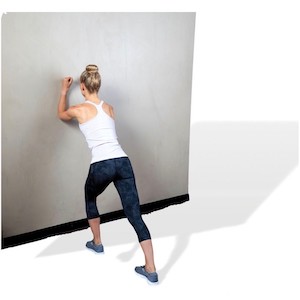
|
Gastrocnemius stretch [stretch01] | stretch01.htm |
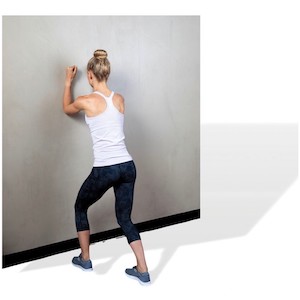
|
Soleus stretch [stretch02] | stretch02.htm |
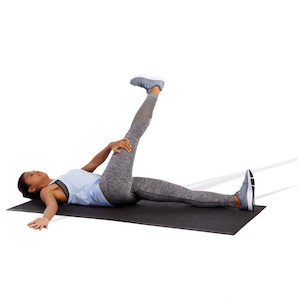
|
Supine biceps femoris stretch [stretch04] | stretch04.htm |
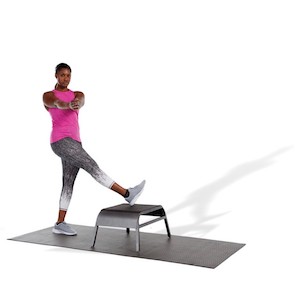
|
Standing biceps femoris stretch [stretch05] | stretch05.htm |
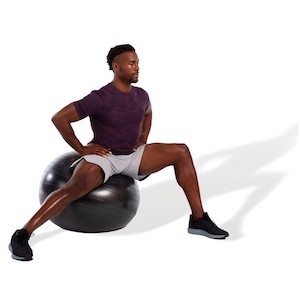
|
Seated ball adductor stretch [stretch06] | stretch06.htm |
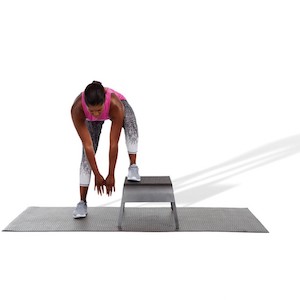
|
Adductor magnus stretch [stretch08] | stretch08.htm |
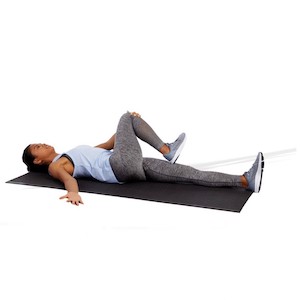
|
Supine piriformis stretch [stretch11] | stretch11.htm |
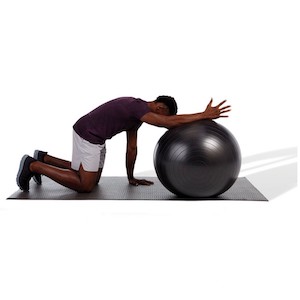
|
Ball latissimus dorsi stretch [stretch13] | stretch13.htm |
|
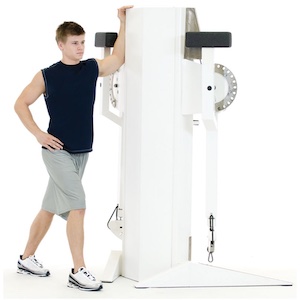
Pectoral stretch [stretch14] | stretch14.htm |

|
Upper trapezius/scalene stretch [stretch15] | stretch15.htm |
|
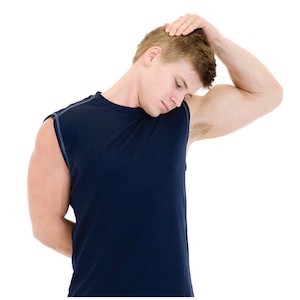
Levator scapulae stretch [stretch16] | stretch16.htm |

|
Sternocleidomastoid stretch [stretch17] | stretch17.htm |
Dynamic stretches
About dynamic stretching [from NASM]:
Dynamic stretching uses the force production of a muscle and the body’s momentum to take a joint through the full available range of motion.
Dynamic stretches are often used in a specific warm-up protocol. These stretches tend to mimic movements used during an exercise session or sport competition. For example, a fitness professional may have a client perform a series of pushups prior to initiating the bench press exercise or hip swings prior to performing squats. The goal is to prepare the body for more intense activity rather than cause breathlessness and exhaustion.
There are 18 dynamic stretching exercises:
| Icon | Name (ID) | Page |
|---|---|---|
|
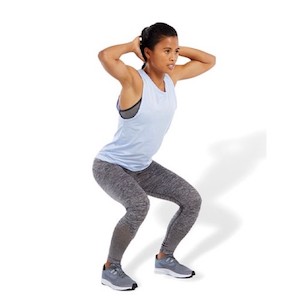
Prisoner squat [dynamic01] | dynamic01.htm |
|
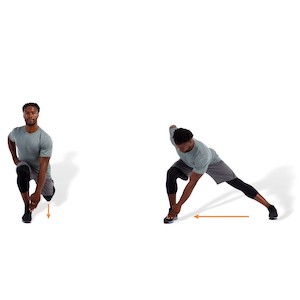
Lunge with reach [dynamic02] | dynamic02.htm |
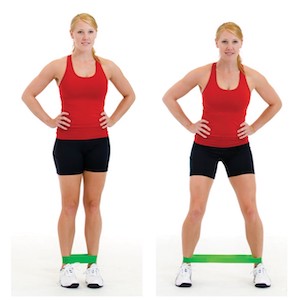
|
Tube walking: side to side [dynamic04] | dynamic04.htm |
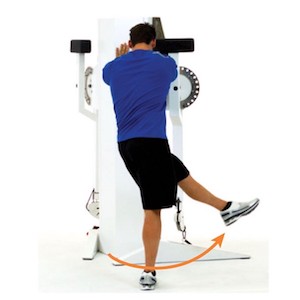
|
Leg swings: side to side [dynamic06] | dynamic06.htm |
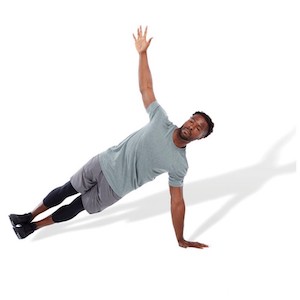
|
Push-up with rotation [dynamic09] | dynamic09.htm |
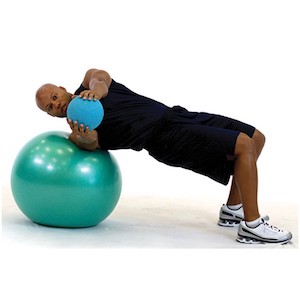
|
Ball Russian twist [dynamic10] | dynamic10.htm |
|
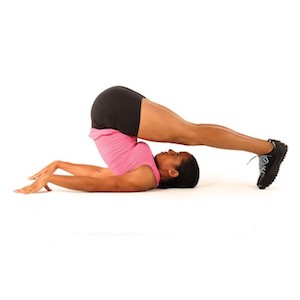
Plow [dynamic15] | dynamic15.htm |
|
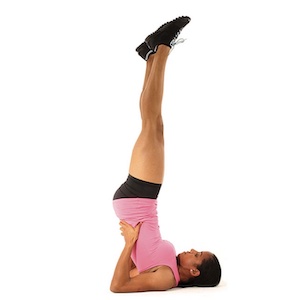
Shoulder stand [dynamic16] | dynamic16.htm |
|
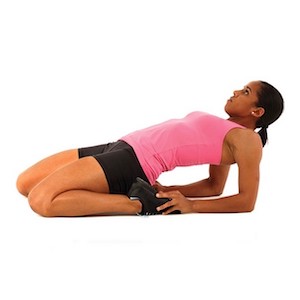
Arching quadriceps [dynamic18] | dynamic18.htm |